
La caverne de Fingal, un trésor naturel en Écosse, suscite l’admiration des voyageurs du monde entier. Située sur l’île de Staffa, cette formation basaltique unique offre un spectacle à couper le souffle. Avec ses colonnes de basalte hexagonales, sculptées par des millions d’années de chaleur volcanique et d’érosion marine, elle est le fruit d’un phénomène géologique fascinant. Ce lieu n’est pas seulement une merveille de la nature, mais également un patrimoine culturel inestimable, ayant inspiré des artistes tels que Felix Mendelssohn et Jules Verne. L’attrait de la caverne de Fingal repose sur son acoustique exceptionnelle, où le battement des vagues crée une symphonie naturelle qui enchante les visiteurs. En 2026, elle demeure une destination incontournable pour les amateurs de tourisme, de géologie et de paysages spectaculaires, invitant chacun à vivre une aventure inoubliable.
Découverte de la caverne de Fingal
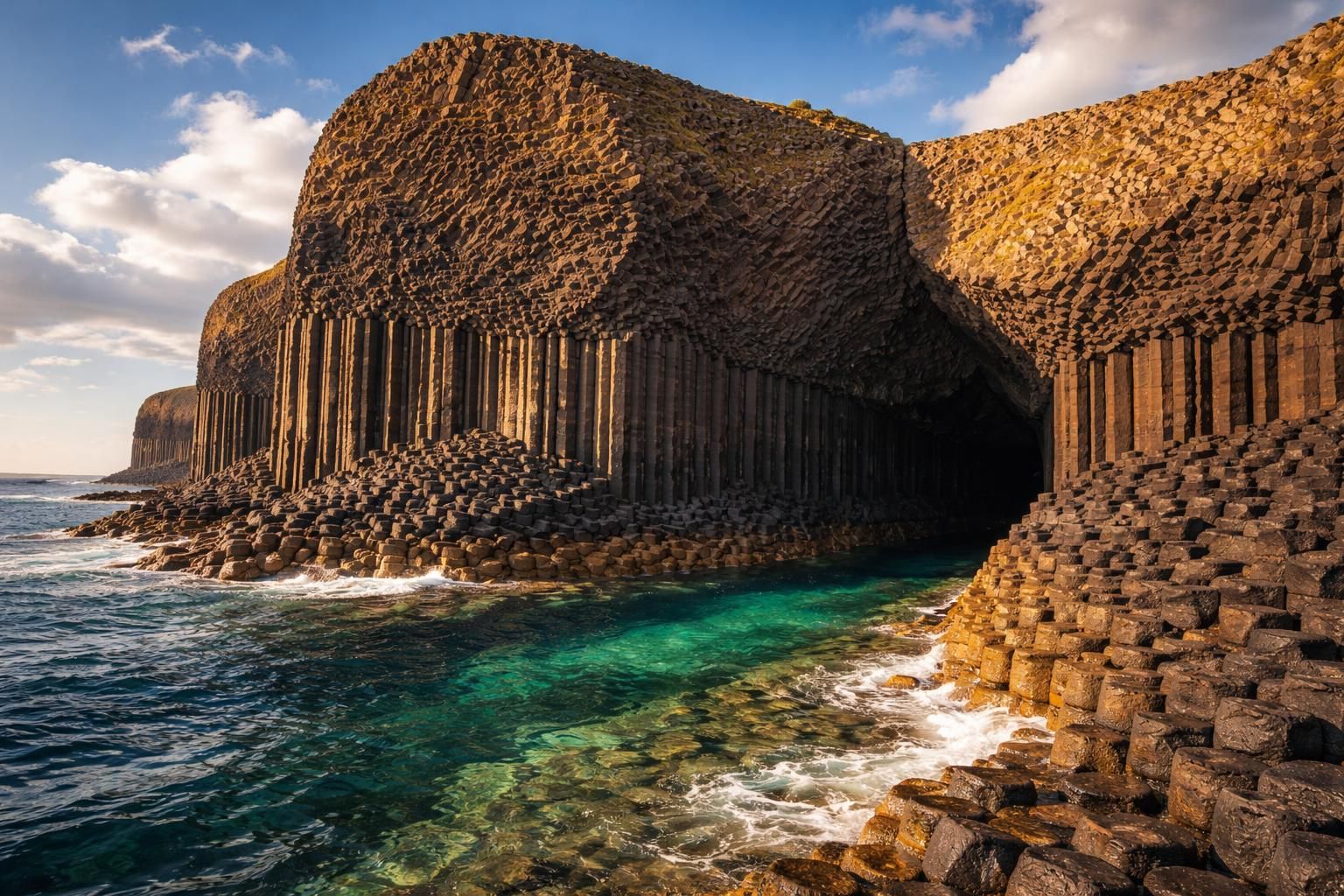
La caverne de Fingal, ou An Uaimh Bhinn en gaélique, est une formation géologique fascinante située sur l’île de Staffa. Cette caverne a été formée il y a environ 60 millions d’années, suite à des éruptions volcaniques qui ont entraîné un refroidissement rapide de la lave, créant des colonnes de basalte hexagonales spectaculaires. Au cours des siècles, la mer a érodé ces structures, leur conférant une allure majestueuse et unique, semblable à celle d’une cathédrale. Les dimensions de la caverne sont impressionnantes, avec des hauteurs atteignant jusqu’à 22 mètres, ce qui contribue à sa renommée en tant que site naturel d’exception.
Une aventure géologique fascinante
La formation basaltique de la caverne de Fingal est un sujet d’intérêt tant pour les géologues que pour le grand public. Les colonnes de basalte qui s’élèvent fièrement à l’intérieur de la grotte résultent de la solidification de la lave à des températures extrêmement élevées. Ce phénomène, appelé congélation rapide, est responsable de la création de ces structures hexagonales si uniques. La cheminée de la caverne, qui s’enfonce à 69 mètres de profondeur, témoigne de la force des éléments naturels.
Des études montrent que ce site est également accessible à travers une série de parcours de randonnée, permettant aux visiteurs d’observer de près les formations rocheuses qui entourent la caverne. Les explorateurs peuvent également se renseigner sur d’autres formations basaltiques à proximité, comme les célèbres orgues basaltiques que l’on trouve en Islande. En somme, cette caverne n’est pas seulement un lieu à visiter, mais un véritable voyage dans le temps à travers l’histoire de la Terre.
Cultural Significance and Inspiration
The caverne de Fingal is not just a natural wonder, but also a cultural landmark that has deeply influenced art and literature. Over the years, this unique site has served as a muse for various artists, including the composer Felix Mendelssohn, who was inspired to write his famous overture “Die Hebriden” after experiencing the cave’s remarkable acoustics. Similarly, the renowned author Jules Verne embedded the caverne de Fingal in the climax of his novel “Le Rayon Vert.” Such cultural references highlight the cave’s significance beyond its geological allure.
Artistic Connections
The connection between the caverne de Fingal and the arts can be further illustrated through the work of artists like the band Pink Floyd, who dedicated a song to this remarkable location. This musical legacy underscores the cave’s ability to evoke strong emotions, serving as a backdrop for creativity and inspiration. Furthermore, numerous painters and poets have depicted the beauty of Fingal’s Cave, showcasing its ethereal quality and natural acoustics, which can captivate the imagination of anyone who visits.
In conclusion, the cultural implications of the caverne de Fingal extend into multiple art forms, making it a site of not only geological but also artistic importance. These connections encourage visitors to appreciate the cave not only for its physical beauty but also for its ability to inspire creativity.
Accessing the Caverne de Fingal
The caverne de Fingal is primarily accessible by boat, which adds to the adventure of visiting this remote and spectacular location. The nearest major port is Oban, a charming town on the west coast of Scotland. From there, multiple local ferry services operate regular trips to Staffa, particularly during the peak tourist season from May to September, when the weather conditions are more favorable. This time frame offers an ideal opportunity for sightseeing, as calmer seas make navigation easier.
Planning Your Visit
Visitors should consider several factors when planning their trip to the caverne de Fingal. Wearing appropriate clothing is crucial, as weather conditions can change rapidly in this coastal region. It is advisable to bring waterproof gear and sturdy footwear, given the rocky terrain. Additionally, binoculars can enhance the experience by allowing closer observation of the diverse wildlife, including puffins and other seabirds that nest along the cliffs surrounding the cave.
- Take a ferry from Oban or Mull.
- Schedule your visit during the peak season for the best weather.
- Pack suitable clothing for changing weather conditions.
- Bring binoculars for wildlife observation.
By planning carefully, tourists can maximize their experience at this natural wonder, ensuring that they take full advantage of the unique offerings of the caverne de Fingal.
The Experience of the Caverne de Fingal
Upon arriving at the caverne de Fingal, visitors are greeted by breathtaking scenery and the soothing sounds of ocean waves crashing against the cave’s walls. The journey to the cave, as well as the views of the surrounding landscape, create a sense of anticipation and excitement. Many travelers describe their first sight of the cave as unforgettable, characterized by the striking contrast between the black basalt and the turquoise waters.
Unique Acoustic Experience
One of the most remarkable features of the caverne de Fingal is its magical acoustics. The sound of the waves reverberating within the cave generates an ethereal environment, where the natural sounds of the ocean seem to harmonize with the faint echoes. This phenomenon has led to the cave being referred to as a “musical cave,” further solidifying its reputation as a site of extraordinary natural beauty.
Visitors often find themselves immersed in the experience, listening to the hypnotic rhythms created by the interplay of water and rock. Many recount that spending time in the cave is not just a visual feast but a sensory journey. The combination of stunning visuals and extraordinary sounds presents a compelling reason to include the caverne de Fingal on any travel itinerary.
The Ecological Environment of Fingal Cave
The surrounding environment of the caverne de Fingal is rich in biodiversity, which adds another layer to the overall experience. The cliffs around the cave are home to various bird species, including puffins, razorbills, and guillemots. This ecological aspect attracts birdwatchers and nature enthusiasts, who can observe these creatures in their natural habitat.
Wildlife Conservation Efforts
Efforts to preserve the delicate ecosystems around the caverne de Fingal have been implemented to ensure that wildlife continues to thrive in the region. Organizations work both locally and nationally to monitor bird populations and maintain the health of the marine environment. Tourists are encouraged to respect wildlife by adhering to guidelines while observing animals in their natural habitats.
| Espèce | Status de Conservation | Note |
|---|---|---|
| Puffin | Vulnérable | Population en déclin, protection importante |
| Guillemot | Stable | Population en augmentation |
| Razorbill | Vulnérable | Sujette à des fluctuations importantes |
By supporting conservation efforts, visitors can ensure that the extraordinary wildlife surrounding the caverne de Fingal continues to flourish, enriching the experience for future travelers. The commitment to preserving the natural beauty of this area contributes to the site’s overall significance as a destination for exploration.
Final Thoughts on Visiting Fingal Cave
In conclusion, visiting the caverne de Fingal presents a unique blend of natural beauty, cultural significance, and ecological importance. As travelers explore this spectacular location, they are reminded of the intricate relationship between nature and art, as well as the ongoing efforts to protect and preserve such remarkable sites.
Moreover, planning a visit is more than just an adventure; it’s an opportunity to connect with the stunning landscapes and diverse wildlife of Scotland. With its combination of unparalleled geology and rich cultural heritage, the caverne de Fingal is a destination that truly deserves a place on every traveler’s wishlist.